Background
Arba Minch University (AMU), located at 6°3’50” N, 37°33’41” E in South Ethiopia Regional State, began as the Arba Minch Water Technology Institute in 1986 and became a full university in June 2004 (proclaimed September 2004). It focuses on teaching (undergraduate and postgraduate), demand-driven research, community outreach, and technology transfer across two institutes, four colleges, two schools, and one campus. Key research centers include those for biodiversity research and conservation center, highland fruits and vegetables, livestock and fishery, renewable energy, neglected tropical diseases, water resources, culture/language studies, and demography/health development.
Biodiversity is highlighted as vital for human well-being, ecosystem stability, and benefits (economic, ethical, aesthetic), but threatened by land-use changes, deforestation, agricultural intensification, habitat fragmentation, pollution, urbanization, and climate change. Global and national efforts via the Convention on Biological Diversity (CBD) and Ethiopian Biodiversity Institute (EBI, the national CBD focal point) emphasize conservation, sustainable use, and equitable benefit-sharing.
Arba Minch University Biodiversity Research and Conservation Center (BRCC), under the Vice President for Research and Community Engagement, aims to conduct research on biodiversity conservation, sustainable utilization, and equitable benefit-sharing. The strategic plan for 2020-2030 aligns with Ethiopia's national biodiversity strategy (NBSAP) and AMU's research themes.
Biodiversity Research and Conservation Center established in 2010 on two research sites: one in Dorze Holo Enset and Medicinal plants research and conservation site and the other in Arba Minch Demo sites with the total area of seven hectare.
VISION
By 2030, the Biodiversity Research and Conservation Center (BRCC), AMU, aspires to be a leading center of excellence in Biodiversity Research, Conservation and Training in Ethiopian and competitive in Africa, thereby, the representative ecosystems, biodiversity sites, and protected areas of the southern region of Ethiopia are conserved and sustainably utilized.
Biodiversity Research and Conservation Center (BRCC), AMU, aspires to be a leading center of excellence in Biodiversity Research, Conservation and Training in Ethiopian and competitive in Africa, thereby, the representative ecosystems, biodiversity sites, and protected areas of the southern region of Ethiopia are conserved and sustainably utilized.
MISSION
The BRCC mission is to carry out a demand driven (problem solving) and multidisciplinary research that is focused on conservation of Gamo and other nearby zone’s biodiversity resources and to create public awareness on how and why they need to conserve, sustainable use and access their biodiversity resource and fairly (equally) share the benefits-costs they get from it.
GOAL
The strategic goals of the BRCC have been based on the analysis of the existing realities of the country’s biodiversity status, such as level of threats, root causes, impacts, government priorities, policy and existing capacity of AMU. The Center has identified five Strategic Goals, developed in alignment with the Aichi Biodiversity Targets,
- Address the root causes of biodiversity loss.
- Reduce human-induced pressures on biodiversity and promote its sustainable use to improve the livelihoods of local communities.
- Enhance the conservation of biodiversity by protecting ecosystems, species, and genetic diversity in the region.
- Increase the benefits derived from biodiversity and ecosystem services for all communities.
- Strengthen implementation through participatory planning, knowledge management, and capacity building.
RESEARCH PRIORITIES OF THE CENTER
- Endemic, endangered and threatened medicinal plants collection and identification; extraction and analysis of biological active compounds; and identifying economic and ecological values of these medicinal plants.
- Economically and socially valuable plant varieties (Enset, Moringa, Banana etc) collection and identification; analysis of its nutritional, economical, socio-cultural and ecological values; and identifying common diseases affecting the plant variety and finding the solution.
- Identification of neglected and underutilized crops in relation with traditional knowledge and food security values.
- Endemic, endangered and threatened aromatic, oily, and other economically important plants collection and identification; extraction and analysis of biological active compounds and formulation of ingredients.
- Aquaculture construction to conserve and sustainable use for variety of fish species.
- Wild life inventory and status assessment of national parks in south Ethiopia
- Assessment of indigenous knowledge on medicinal plants, animal production and husbandry.
- Ecological studies of plant diversity in national parks and forest priority areas.Microbial diversity studies for biotechnological application purpose.
- Indigenous ecological knowledge for climate change, mitigation and resilience.
CORE VALUES OF THE CENTER
· Research and Innovation: the center shall be a leading center of research and innovation in biodiversity research both in terms of fundamental academic and associated community benefits.
· Active community Engagement: the center shall promote interaction with wider society so that the insight of the research outputs of biodiversity is disseminated as widely as possible for the conservation and sustainable use of natural resources in order to serve the community across the country.
· Affirmative action and Diversity Management: the center shall promote equal opportunity for its staff and local community. It shall uphold a culture free of discrimination on the basis of ethnicity, gender, religion or belief.
· Capacity Building: staff capacity building shall be undertaken to improve research performance of its personnel, especially on biodiversity conservation and management.
· Intellectual Freedom: the center shall promote the research and academic rights of all the staffs and the wider AMU community to express their views freely, in the pursuit, advancement and dissemination of knowledge in a spirit of mutual respect.
· Quality Assurance: the center shall oversee its researchers accountable to carry out a quality research; it shall ensure that the research outputs contain research results that meet basic research standards.
· Members of the center shall also cherish the following values: honesty, loyalty, transparence, personal and professional integrity, self-development and diligence, take pride in their work, seek to foster inclusiveness and reward competence.
RESEARCH COLLABORATION OF THE CENTER
The Center is open to national and international research projects and capacity ‑ building collaborations. It actively promotes joint research among the University’s colleges and institutes, with shared responsibility from management, academic staff, and researchers in fostering an environment conducive to collaboration and high ‑ quality research. Research activities will be carried out in partnership with higher education and research institutions, public sectors, governmental and non‑ governmental organizations, and donors, as appropriate, while strengthening inter ‑ college and inter‑ institute cooperation within the University.
CODE OF CONDUCT
Researchers participating in Biodiversity research projects need to be honest and responsible to obey research ethics and philosophy. They should be involved in initiating research that addresses societal problems towards the development of the institution and country at large. The researchers should not be involved in illegal or misuse of research funds and required to declare conflict of interests.
DISSEMINATION OF RESEARCH OUTPUT
The research findings on Biodiversity shall be disseminated through workshops, conferences, symposia, proceedings, newsletters, leaflets, AMU web-site, journals and books, etc.
CONTACT
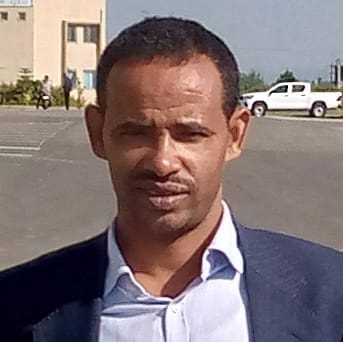
- Research Director: Dr. Shetie Gatew Mitiku (PhD, Associate Professor, Environmental Science)
Email:-This email address is being protected from spambots. You need JavaScript enabled to view it. ;This email address is being protected from spambots. You need JavaScript enabled to view it. - Phone: - +251904852420
- Office location: Arba Minch University, Abaya campus, College of Natural and Computational Sciences, New Management building, 3rd floor.