

Arba Minch University (AMU) hosted a six-day Advanced Masters’ Field School under the Cultural Anthropology and Development Studies (CADES) program for the second time from January 26–31, 2026, under the theme “Indignity, Peace-Building, and the Environment in the Gamo Highlands, Ethiopia.” The field school was designed to bring together a diverse group of international students and academic staff from five academically interconnected countries, promoting cross-cultural learning, collaborative research, and intensive field-based academic engagement. Click here to see more photos.
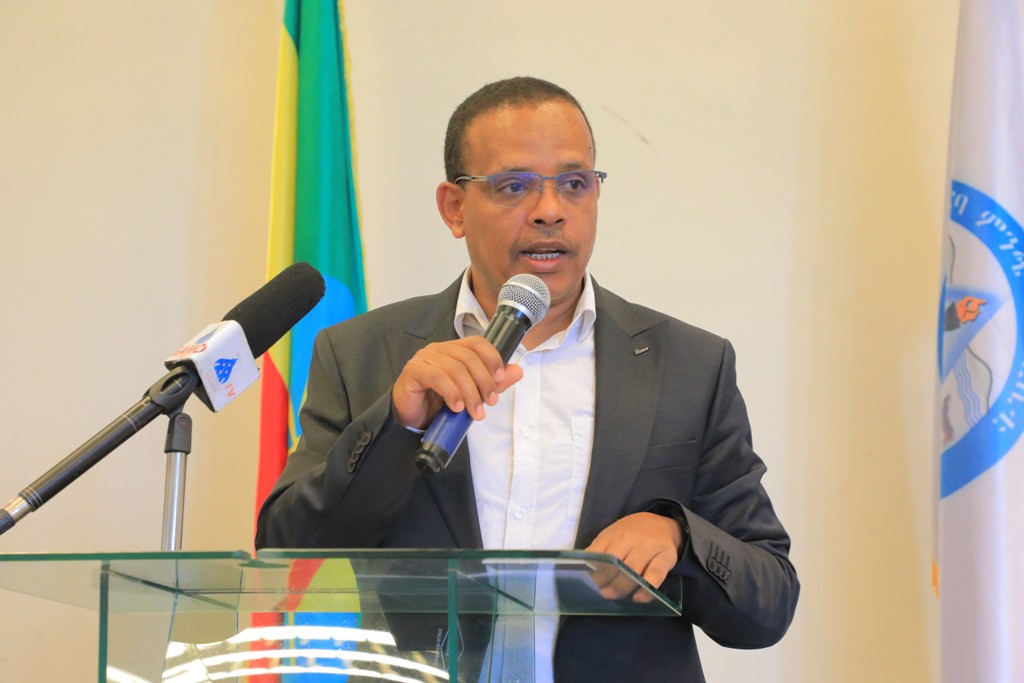
Opening the ceremony, AMU President Dr. Eng. Abdella Kemal stated that AMU is among Ethiopia’s leading higher education institutions, firmly committed to excellence in teaching, research, community engagement, and internationalization as a core pillar of its institutional vision. He highlighted the CADES program at KU Leuven as a strong example of AMU’s commitment to global academic cooperation, noting that beyond its academic rigor, the program is distinguished by its annual field school jointly organized by five partner universities. Dr. Eng. Abdella further emphasized that, in previous years, AMU staff and students actively participated in field schools hosted in Belgium, South Africa, Mozambique, and the Philippines, benefiting from intensive training in data collection, analysis, and critical reflection. He further added that this year’s theme is also timely and highly relevant, underscoring the indigenous peace-building traditions that provide an ideal setting to explore these interconnected themes.
Dr. Abera Uncha, Dean of the College of Social Sciences and Humanities, stated that the grassroots of peace-building in Ethiopia is deeply rooted in the complex interaction of cultural practices, social dynamics, and political contexts. He noted that Ethiopia’s rich ethnic diversity, comprising more than 80 ethnic groups, offers both opportunities and challenges for social cohesion, particularly during times of conflict when community bonds may weaken and require localized, creative approaches to conflict resolution. Dr. Abera highlighted that the Gamo people of Southern Ethiopia possess well-established indigenous conflict resolution mechanisms passed down through generations, involving elders from different social statuses and respected community members who resolve disputes through dialogue, mediation, and negotiation. He underscored that these enduring traditions make the Gamo area an ideal setting for the field school’s academic and practical explorations.
Dr. Bayisa Feye, Head of the Department of Sociology and Social Anthropology and the event organizer, noted that CADES Field School in the Gamo Highlands with the theme of indignity and peace-building brings together a diverse group of international students and staff from five academically interconnected countries, fostering learning, collaboration, and the exchange of perspectives across different socio-cultural contexts and approaches to anthropology. He added that participants would explore essential themes such as indigenous knowledge, peace-making, and the environment in relation to conflict and conflict resolution, with a special focus on ‘Gomee’, the indigenous environment-based rules of the Gamo, to understand the intricate interactions between people and their surroundings. The theme of indignity and peace-building is intended to inspire future anthropological endeavors, promising an enriching experience of discovery, dialogue, and cross-cultural connections, he underscored.
Dr. Ann Cassiman, Academic Coordinator of CADES, explained that the CADES Field School integrates lectures, debates, and intensive fieldwork across multiple disciplines, including anthropology, sociology, history, the arts, and the humanities. She noted that the lectures and discussions provide historical context for working in Ethiopia and in the Gamo Highlands while highlighting key theoretical and methodological approaches for studying indignity, peace-building, and conflict resolution.
The field school was held in the Dorze area of Gamo Zone, Southern Ethiopia Regional State, where the opening ceremony was marked by a traditional ritual blessing by Gamo elders. The 2026 Field School brought together esteemed professors, researchers, and students from Arba Minch University Department of Sociology and Social Anthropology, Ethiopia, KU Leuven Faculty of Social Sciences, Department of Social and Cultural Anthropology, CADES Program, Belgium, University of Cape Town, Faculty of Humanities, Anthropology Department, South Africa, Universidade Eduardo Mondlane Department of Archaeology and Anthropology, Mozambique, and the University of the Philippines Baguio Department of Anthropology, Sociology, and Psychology, Philippines, underscoring the program’s strong international and interdisciplinary collaboration.
For more Information Follow us on:-
Website - https://www.amu.edu.et/
Telegram - https://t.me/arbaminch_university
Facebook - https://www.facebook.com/ArbaMinchUniversityccd/
YouTube - https://www.youtube.com/channel/UCOO_nclhMo8M3r74OyPBlVA
Public and International Relations Executive