

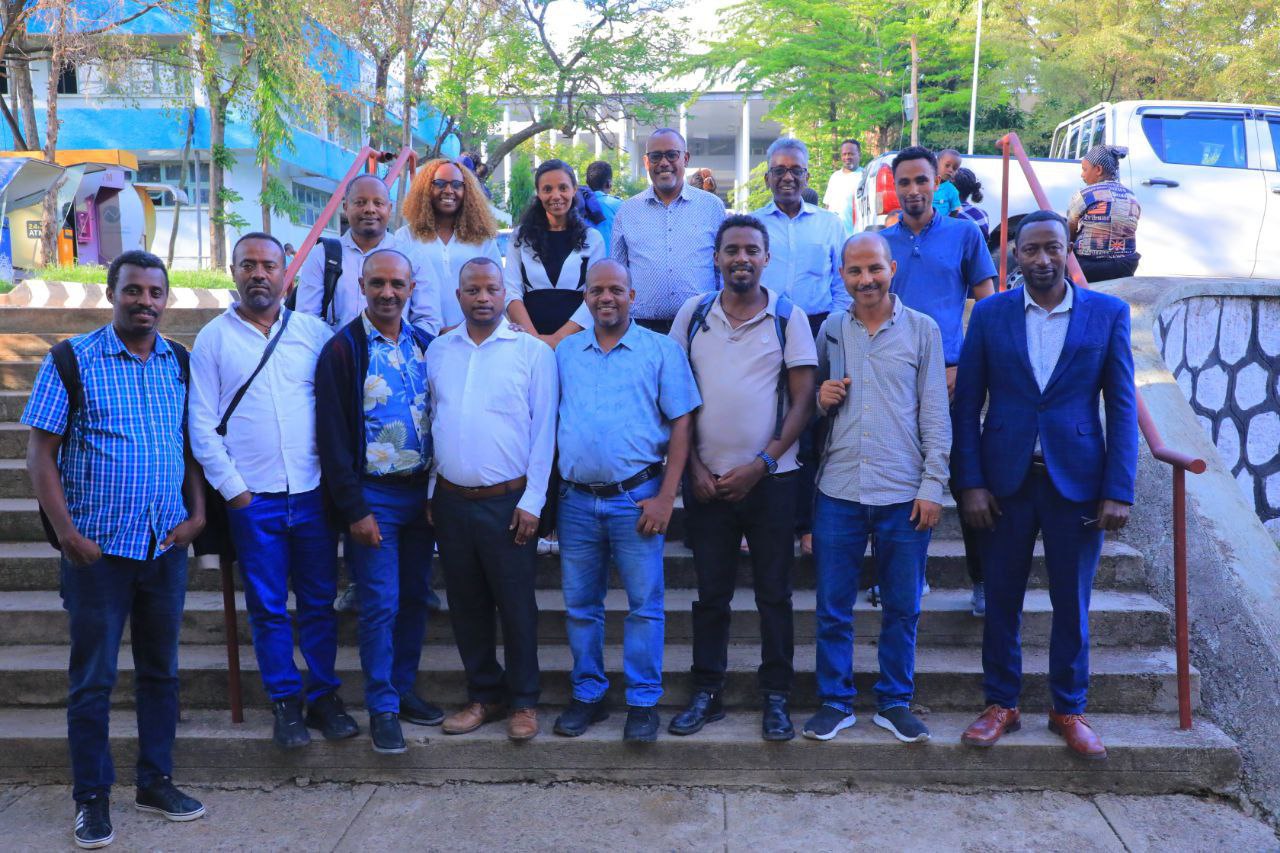
The Interuniversity Cooperation program at Arba Minch University (AMU-IUC) organized a capacity-building training on March 11, 2026, aimed at strengthening gender inclusivity across its sub-projects and community outreach activities. Click here to see more photos.
Held at the AMU-IUC Video Conference Room, the training brought together sub-project leaders and team members to enhance gender-responsive implementation and improve the quality of final reporting. The session was facilitated by Dr. Mesfin Tilahun Gelaye.
Speaking at the event, AMU-IUC Project Manager Dr. Fasil Eshetu said the Phase I evaluation of the VLIRUOS–AMU-IUC program demonstrated strong performance in both technical achievements and financial management. However, he noted that gender inclusivity was identified as an area requiring further improvement.
To address this gap, the project established an additional transversal sub-project—Project 7—tasked with mainstreaming gender considerations across the six existing sub-projects. Dr. Fasil explained that the training was organized to help teams better integrate gender perspectives into outreach activities and ensure that these efforts are clearly reflected in implementation and final reporting.
During the training, facilitator Dr. Mesfin Tilahun emphasized that gender inclusivity is essential for achieving effective and sustainable project outcomes. He noted that integrating gender perspectives enhances project performance, encourages innovation, promotes equitable participation, and contributes to lasting community impact.
Dr. Mesfin further explained that gender mainstreaming aligns with key principles of the Sustainable Development Goals, including the “Leave No One Behind” approach, clear linkage of activities to specific SDGs, measurable results through defined indicators, and collaboration with local stakeholders. He stressed that systematically documenting gender-related indicators is crucial for demonstrating the real impact of projects and strengthening future funding opportunities.
Dr. Genaye Tsegaye, leader of Trasversal Sub-Project 7, also noted that the training was organized to address gaps observed across the sub-projects in integrating and documenting gender inclusivity. She explained that several teams had difficulty clearly demonstrating how gender mainstreaming was reflected in their outreach activities.
According to Dr. Genaye, recent outreach workshop reports also showed limitations in presenting gender-inclusive outcomes as expected, highlighting the need to strengthen both practice and reporting.
Mrs. Bayush Tesfaye, Gender and Outreach Program Coordinator of the AMU-IUC project, noted that several gaps have been observed in how sub-projects report gender inclusivity in their outreach activities. She explained that many reports fail to clearly demonstrate gender-responsive outcomes or adequately present sex-disaggregated data showing the participation and benefits of women and men. Mrs. Bayush stressed that improving gender-sensitive reporting and documentation is essential to clearly reflect the inclusiveness and impact of the project’s community engagement efforts.
Participants were introduced to practical tools for integrating gender considerations into project activities, including the use of sex-disaggregated data, gender-sensitive communication, and inclusive outreach planning. They also engaged in group exercises to review their current activities, identify gender indicators, and present their findings for peer feedback.
In their final remarks, trainees appreciated the training for enhancing their understanding of gender mainstreaming and for providing practical guidance on integrating gender considerations into outreach activities and reporting. They noted that the session would help them better document and demonstrate gender-inclusive impacts in their respective sub-projects.
The initiative forms part of AMU-IUC’s broader effort to strengthen inclusive research practices and enhance the social impact of its community engagement initiatives while aligning its activities with the “Leave No One Behind” principle of the United Nations Sustainable Development Goals.
For more Information Follow us on:-
Website - https://www.amu.edu.et/
Telegram - https://t.me/arbaminch_university
Facebook - https://www.facebook.com/ArbaMinchUniversityccd/
YouTube - https://www.youtube.com/channel/UCOO_nclhMo8M3r74OyPBlVA
Public and International Relations Executive