• SMIS
  • AMU Mail
  • Digital Library
  • AMU RDB
  • E-learning
  • AMU
    • About AMU
    • Presidents Message
    • Campus Guide
    • Contact us
  • Administration
    • Presidents' Office
      • AMU President
      • Academic Affairs
      • Research and Community Service
      • Administration
  • Offices
  • Academics
    • School of Graduate Studies
    • Institutes
      • Arba Minch Institute of Technology
      • Arba Minch Water Technology
    • Colleges
      • Agriculture
      • Business & Economics
      • Medicine and Health Sciences
      • Natural & Computational Sciences
      • Social Sciences & Humanities
      • Continuing & Distance Education
      • Sawla Campus
    • Schools
      • School of Law
      • School of Pedagogical and Behavioral Sciences
      • School of Medicine
    • Sport Academy
  • Research
  • Registrar
    • About Us
    • Alumni Registration
    • Alumni
  • Journals
    • OMOIJS Journal
    • EJBSS Journal
    • EJWST Journal
    • AMUJCLS Journal
    • EIJET journal
  • SYMPOSIA
    • Sustainable Water Resources Development
    • ICET
    • Science for Sustainable Development
    • Research for Development
    • Indigenous Knowledge Studies
    • Annual Research and Publication Review
    • International Enset Symposium
      • Enset Symposium 2024
      • Enset Symposium 2023
    • PUBLIC EVENTS
      • FDRE, Nations and Nationalities Day
      • FDRE, Patriots' Day
      • Victory of Adwa
      • Community and Science Open Day
  • Partnership
    • Our Partners
      • International Partners
      • Local Partners
    • Ongoing Projects
    • Completed Projectss
      • Recently Completed
      • Past Projects
    • GCPM Online Forms
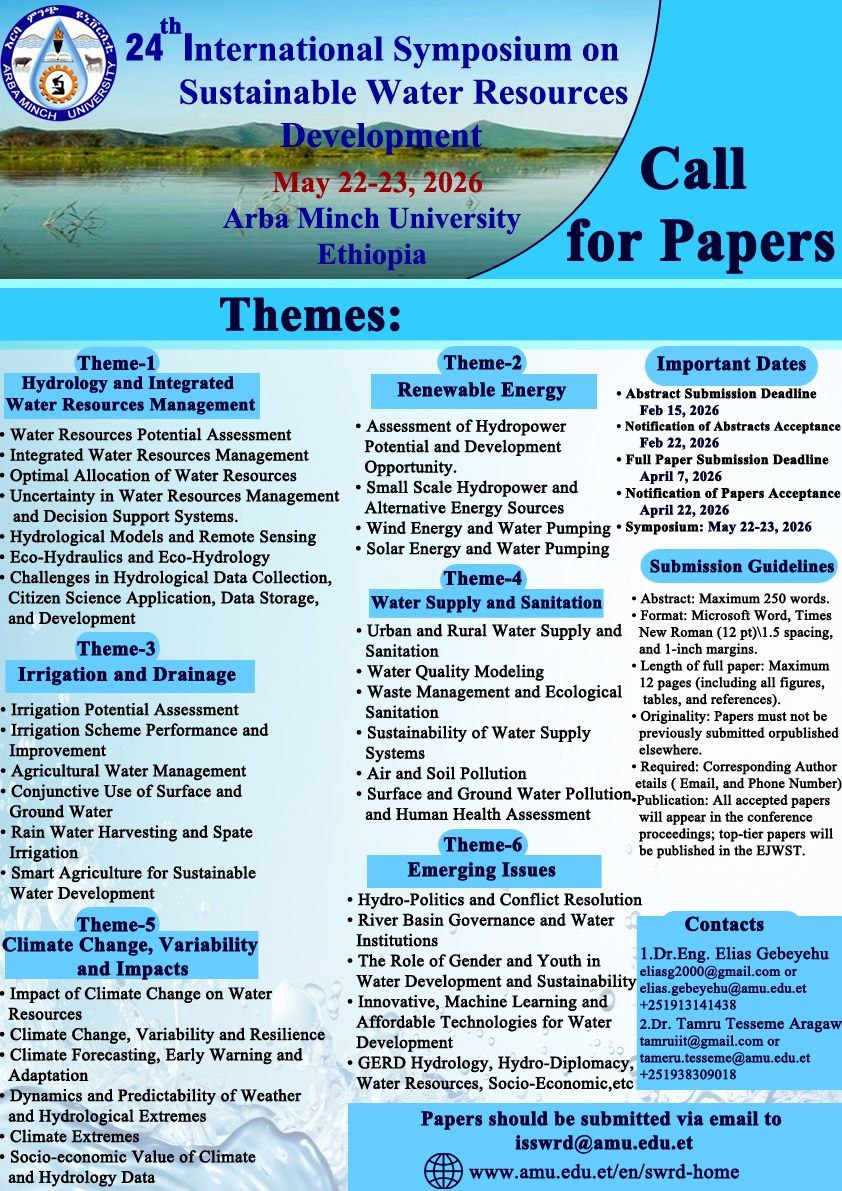
CallforPaper-3.jpeg
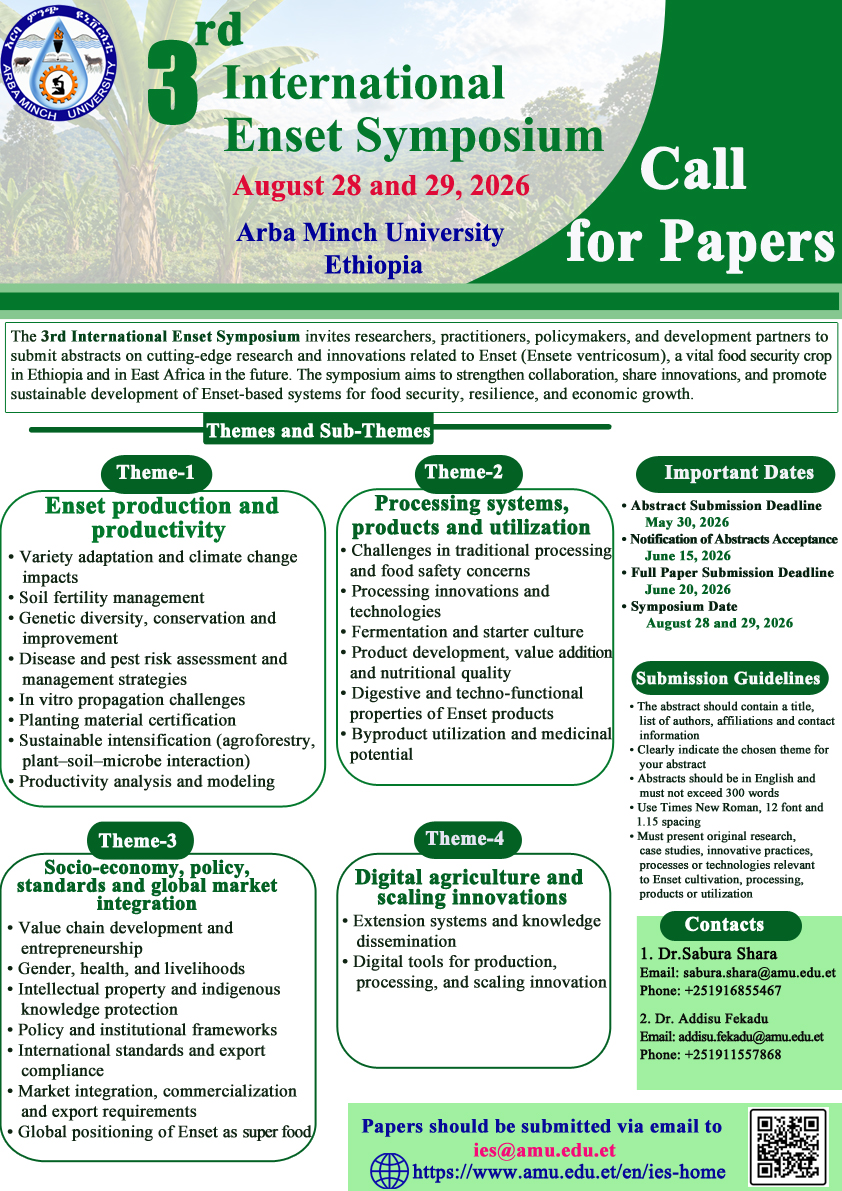
photo_2026-01-21_16-39-28.jpeg
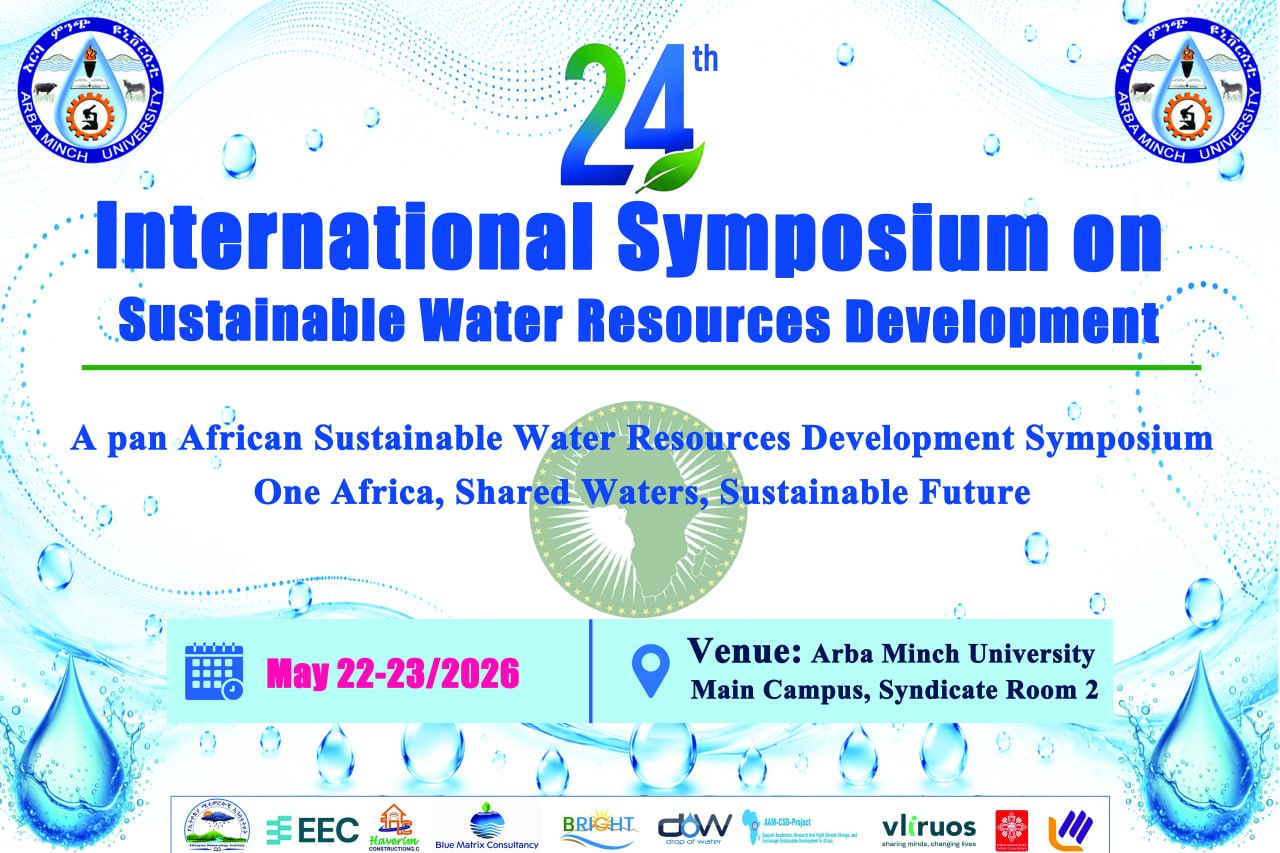
Final SFSD2.jpg
previous arrow
next arrow

Hydro-Meteorological Data Management of the Abay River Basin and Abaya-Chamo Sub-Basins

Details
Fri, 18 November 2011 11:14 am

The university has been training water related professionals for more than two decades. In the year 2003 the university launched post graduate programs. All the graduating students of degree or master program have to do a graduating project or thesis respectively. Every year there is to be a final year project, research or thesis work, the individual or the department has to look for the required data from different bureaus. The basic data that are required for a water resources research are hydro-meteorological data. Whenever a research has been completed the raw and processed data of that same research is hardly kept in a well organized way. The researcher only submits these data to the advisor and may be to the department/school of graduate studies.

This study focuses on the collection and sorting of available hydro-meteorological data in the Abay River Bain and Abaya-Chamo sub-Basin of Ethiopia.

The following documents provide the details of this project.

  • Hydro-Meteorological Data Management of the Abay River Basin and Abaya-Chamo Sub-Basins for Research Purpose
  • Abaya Chamo Sub-Basin
  • Abaya River Basin

AMU Email

Details
Mon, 10 October 2011 12:41 pm

The AMU Email service has been updated to a more modern collaborative working system.

Should you have any difficulties logging in to the new service please contact the ICT Center who will investigate and reset your account as required.

ICT Center

Instructional Skills Training for Newly Employed Academic Staff

Details
Wed, 12 October 2011 6:19 am


Arba Minch University holds instructional skills training for all its newly employed academic staff. It has been part of the culture of the university to train all newly employed instructors on didactic skills such as learner centered methodology, continuous assessment, classroom management, instructional planning and ethical aspects in teaching in higher education. This year’s training has commenced today, October 10th, 2011 and will continue for the coming five days.

The university welcomes all new instructors and wishes you a good working year.

Read more: Instructional Skills Training for Newly Employed Academic Staff

Current Students

Details
Thu, 22 September 2011 7:10 am

Professor Yisehak Kechero (PhD)

School of Graduate Studies (SGS) – Arba Minch University

Details
Thu, 01 September 2011 8:52 am

The School of Graduate Studies (SGS) at Arba Minch University (AMU), established in 2002, is committed to producing highly skilled professionals, researchers, and academicians who can advance knowledge and deliver innovative solutions to societal challenges. SGS oversees a broad range of multidisciplinary graduate programs across AMU’s main campus, satellite campuses, field sites, and technology-enabled learning platforms. Offering Master’s and PhD programs, it stands as a center of academic excellence that integrates advanced training, cutting-edge research, and community engagement with a global perspective. Our students, drawn from across Ethiopia and beyond, bring diverse academic and professional experiences, united by a desire to make a meaningful impact. Each year, SGS graduates hundreds of leaders equipped with critical thinking, research expertise, and professional competence, supported by a distinguished faculty of Ethiopian and international scholars who blend rigorous theory with real-world application.

Recognizing the vital role of technology in modern education, SGS is expanding its reach through e-learning and off-campus delivery modes, enabling professionals to pursue advanced degrees while maintaining their careers. Field-based programs in areas such as engineering, water resources, public health, agriculture, and business harness AMU’s strategic location and expertise to address the needs of the Rift Valley and beyond. The School also forges strong partnerships with governmental, non-governmental, and international organizations to enhance the quality and relevance of its programs. Looking forward, SGS aims to broaden its academic offerings by introducing new Master’s, PhD, postdoctoral, and professional certificate programs, while maintaining the highest standards of academic excellence, innovation, and societal relevance-preparing graduates to lead and drive positive change at both national and global levels.

Vision

The School of Graduate Studies aspires to be a globally recognized center of excellence in training, research, and community service, producing high-caliber professionals, addressing societal needs, and driving holistic, sustainable development in Ethiopia and beyond.

Mission

The mission of the SGS is to produce competent professionals through high-quality graduate and postgraduate programs that address societal and global needs. SGS advances Ethiopia’s development by delivering relevant degree programs, conducting innovative research, fostering scholarly endeavors, and promoting sustainability, economic growth, and lifelong learning.

Values

In all its endeavors, the SGS commits to:

  • Excellence, quality, and service.
  • Accountability, transparency, and responsible stewardship.
  • Inclusivity, diversity, and respect for all.
  • Ethical and professional standards.
  • Innovation and creativity.
  • Intellectual curiosity, academic freedom, and integrity.
  • Wise management of resources and infrastructure.
  • Engaging with local and global communities.

Goals

The SGS develops professionals and leaders capable of:

  • Solving complex societal challenges with innovative, evidence-based solutions.
  • Conducting impactful basic and applied research that advances knowledge and drives societal progress.
  • Excelling professionally and fostering innovation, critical thinking, and ethical practice in their fields.
  • Promoting sustainable development, social equity, and positive societal change.
  • Engaging in interdisciplinary collaboration to address global and local issues.
  • Contributing to policy formulation, community development, and knowledge dissemination.
  • Mentoring and inspiring future generations of scholars and practitioners.
  • Embracing lifelong learning to adapt to evolving societal and technological challenges.

Core Mandates

The SGS is mandated to:

  1. Create a conducive environment for teaching and learning at MSc and PhD levels.
  2. Ensure both quality and expansion of programs, without one being compromised for the other.
  3. Advance need-based research aligned with national policy priorities.
  4. Design and implement graduate programs responsive to institutional and national needs.
  5. Publish and disseminate research findings and organize forums for scholarly discussion.
  6. Establish and manage academic journals and newsletters.
  7. Contribute to the capacity building of public and nonprofit institutions, including upgrading academic staff qualifications.
  8. Collaborate with the Institutional Quality Assurance Directorate on relevance and quality matters.
  9. Undertake other activities consistent with its mission and the vision of AMU.

Organizational Structure

The SGS operates through:

  • Department Graduate Committees
  • College/School/Institute Academic Commissions
  • The Graduate Council

Department Graduate Committee


The Department Graduate Committees (DGC) functions as the primary academic and administrative bodies for graduate studies within each department. Guided by the policies (including the Senate legislation) of the University and the directives of the Council of Graduate Studies, the DGCs are responsible for:

·         Implementing admission requirements for departmental graduate programs.

·         Proposing and reviewing curricula, courses, and examination arrangements.

·         Monitoring the academic progress and performance of graduate students.

·         Recommending candidates for graduation upon fulfillment of degree requirements.

·         Advising on the introduction of new graduate programs within the department.

·         Ensuring compliance with SGS regulations and maintaining academic standards.

College/School/Institute Academic Commissions

The Academic Commissions of Colleges, Schools, and Institutes operate as the governing bodies for academic affairs within their respective units. Working in accordance with University policies and under the oversight of the Council of Graduate Studies, these commissions are responsible for:

·         Overseeing the planning, coordination, and delivery of graduate programs within the unit.

·         Reviewing and endorsing departmental proposals for new programs, courses, and academic regulations.

·         Ensuring the quality and relevance of curricula and examinations.

·         Monitoring academic standards, research output, and student performance.

·         Facilitating collaboration among departments and promoting interdisciplinary graduate studies.

·         Upholding the rules, guidelines, and strategic objectives of the School of Graduate Studies.

Council of Graduate Studies

The Council of Graduate Studies (CGS) serves as the governing authority of the School of Graduate Studies. In alignment with the University’s policies, the CGS is responsible for:

·         Defining the requirements for admission into graduate programs.

·         Designing and overseeing programs of study, including examinations.

·         Establishing and maintaining standards for the awarding of graduate degrees.

·         Recommending the introduction of new fields of graduate study.

·         Formulating regulations deemed necessary for the effective governance of the SGS.

·         Exercising general oversight over the operations and affairs of the SGS.

University-wide policies apply to the SGS with necessary adaptations. The SGS may also run joint graduate programs in collaboration with other universities until it develops full independent capacity.

Programs Offered

The SGS, through its colleges, schools and institutes, offers programs leading to:

  • Master of Arts (MA)
  • Master of Science (M.Sc.)
  • Master of public health (MPH)
  • Master of Laws (LLM)
  • Doctor of Philosophy (PhD)


Legal Foundation

In line with the Ethiopian Higher Education Proclamation No. 650/2009 and the University Charter (Council of Ministers Charter Regulation No. 235/2011), AMU is mandated to establish, organize, and determine the functions of academic units, including the SGS, and to close or restructure them as necessary.

Contact Information

Professor Yisehak Kechero (PhD,)

Director for School of Graduate Studies,

Institutional Email: This email address is being protected from spambots. You need JavaScript enabled to view it.
Personal Email:
This email address is being protected from spambots. You need JavaScript enabled to view it.|This email address is being protected from spambots. You need JavaScript enabled to view it.
Phone: +251 964 407 780
P.O. Box 21, Arba Minch University, Ethiopia


  1. Post Graduate Application Forms
  2. AMU Offered degrees to over 2,500 Graduates on July 2nd 2011
  3. Other Offices Under the Institutional Quality Enhancement Center
  4. Undergraduate

Page 558 of 563

  • 553
  • 554
  • 555
  • 556
  • 557
  • 558
  • 559
  • 560
  • 561
  • 562

Quick Links

  • News
  • Vacancies
  • AMU Intranet
  • ICT Center

Downloads

  • Newsletter
  • Registrar
  • Academic Calendar
  • Finance & Budget Transparency

Systems

  • SMIS
  • AMU Mail
  • Digital Library
  • AMU RDB
  • E-learning
  • Facebook
  • Telegram
  • Youtube
  • Email

Contact us

Corporate Communication
P.O. Box 21
Arba Minch University

Tel: +251-46881-4986
Fax: +251-46881-0820/0279
E-mail: corcom@amu.edu.et , ictc@amu.edu.et

Systems

  • SMIS
  • AMU Mail
  • Digital Library
  • AMU RDB
  • E-learning

Registrar

  • About Us
  • Alumni
  • Alumni Registration
  • Contact us

Colleges

  • Agriculture
  • Business & Economics
  • Medicine and Health Sciences
  • Natural Sciences
  • Social Sciences & Humanities

Copyright © 2026 Arba Minch University. 

  • Campus Guide
  • Contact Us
  • Sitemap